WeLearn Academy
The Mastery Transcript · Ages 11–18

A grade gives a score. This shows the work.

WeLearn learners build a Mastery Transcript Consortium learning record. Every credit on it is backed by real project work that a mentor has reviewed, including the tests, the restarts and the fixes.

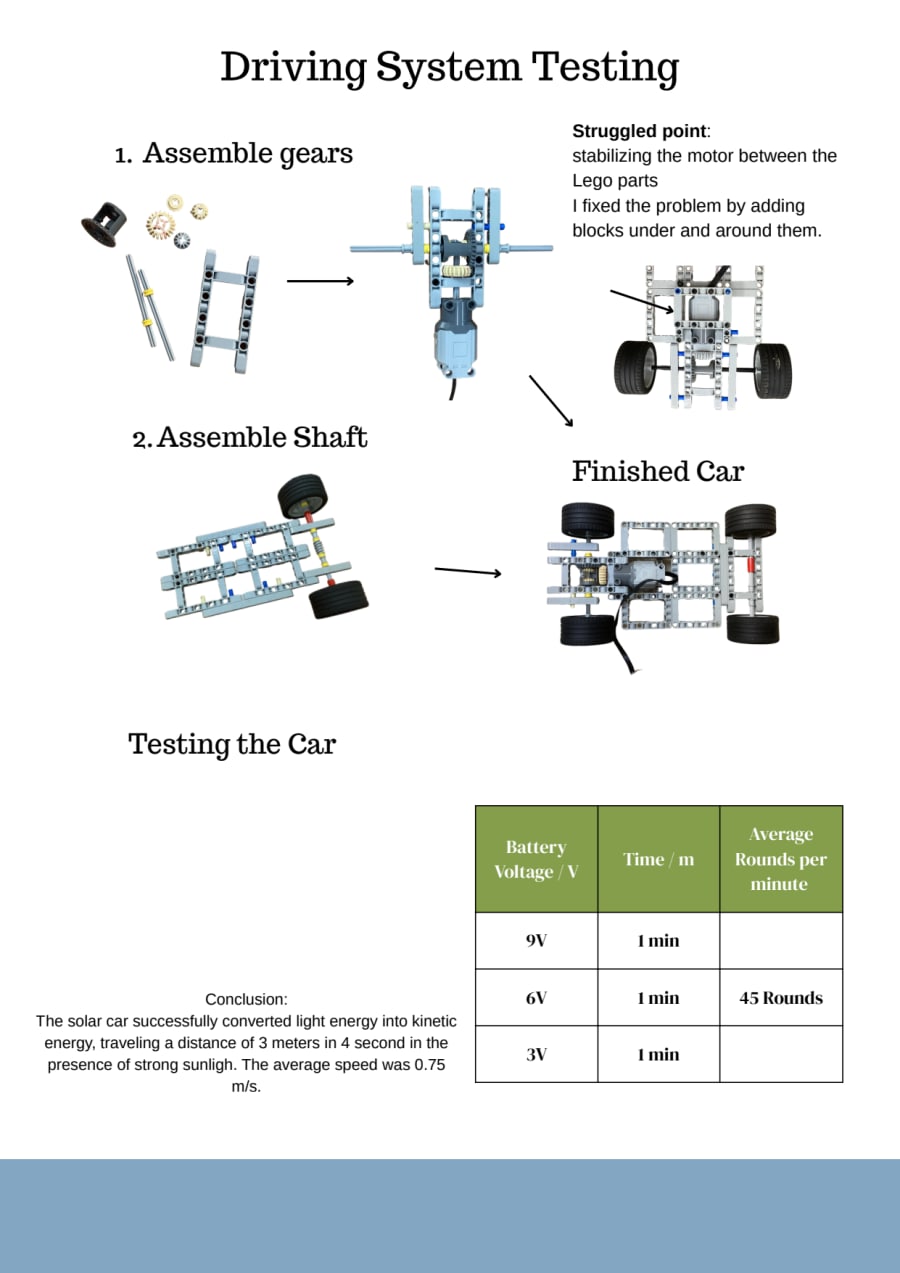
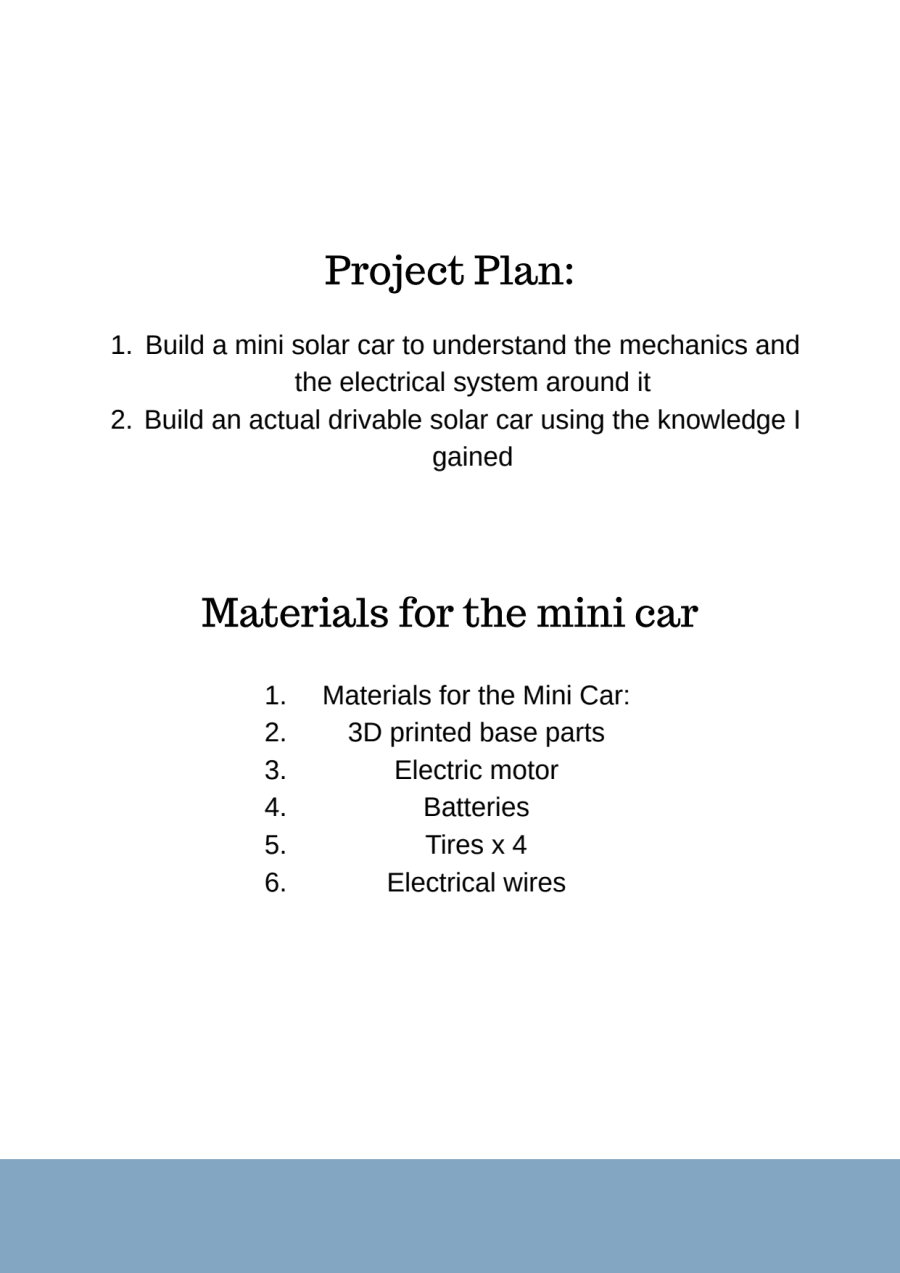
Page from Yuri’s solar car portfolio showing the drive system build and test results
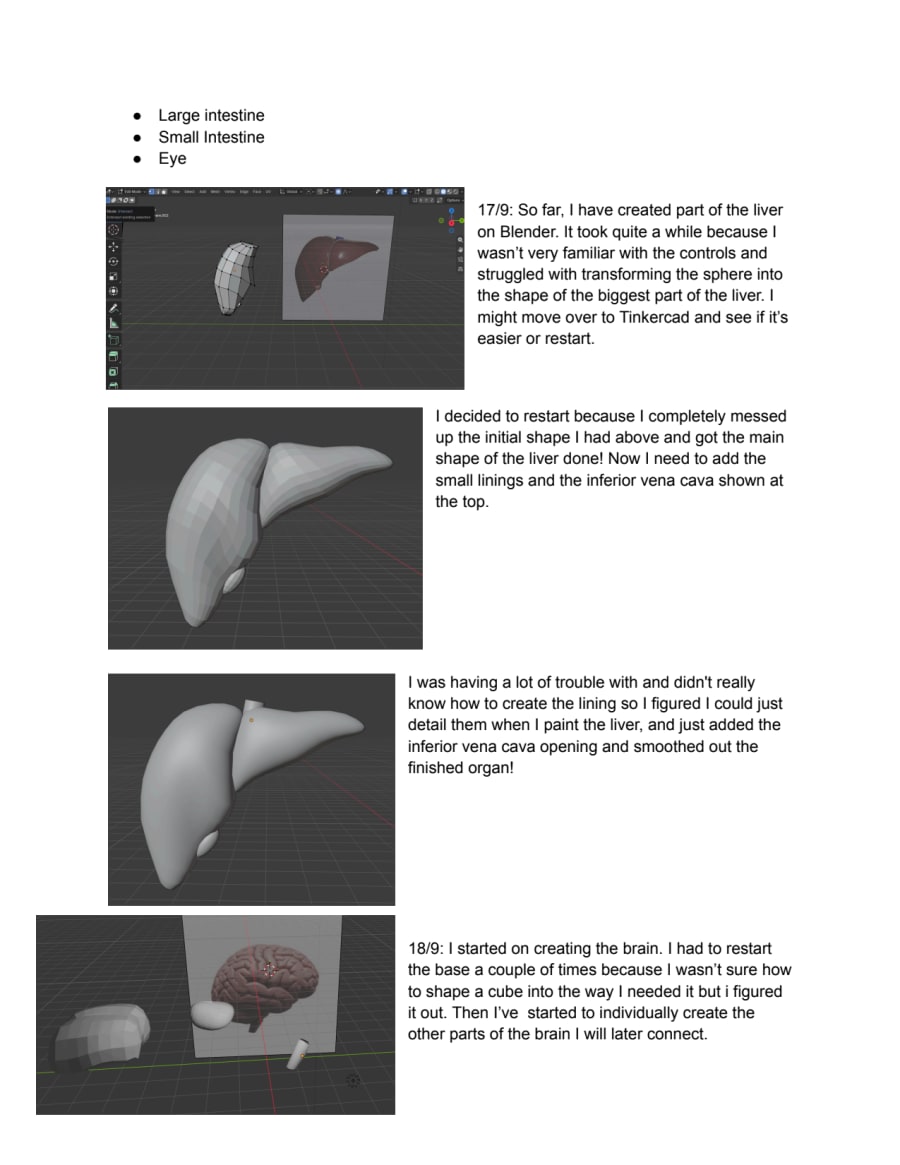
Page from Ana Isa’s anatomy game journal showing the liver modelled in Blender

Real pages from two current WeLearn portfolios

Same project, two ways to record it

A report card

PhysicsB+

It tells you how the term went. It doesn’t say what was built, what was tested, or what the learner can now do.

A Mastery Transcript credit

Engineering DesignCreative Thinking
  • Evidence: solar car build log, test data and photos
  • Mentor feedback written against the criteria
  • The university can open the work itself

How a credit is earned

Nothing goes on the record just for turning up. Each competency needs evidence that passes a mentor’s review.

  1. 1

    A real driving question

    Each 12-week project starts with a question the learner cares about, not a worksheet.

  2. 2

    Document as you go

    Plans, tests, photos, data and dead ends go into a working portfolio, like the ones below.

  3. 3

    Mentor review

    A mentor checks the evidence against the competency’s criteria and gives written feedback. Not yet? Keep going.

  4. 4

    Added to the record

    Only competencies with accepted evidence appear on the learner’s Mastery Transcript Consortium record.

Portfolios in progress

Real work, shown as it is

Two current projects and one finished team project, shared with permission. They aren’t polished showcases. They’re working portfolios, and the restarts and fixes are what a mentor looks for.

Yuri · Sep–Dec 2026 · in progress

Solar Car Engineering

How can we design and build an energy-efficient solar car to reduce environmental impact?

Yuri wants to understand how mechanical, electrical and computer engineering fit together, and cares about clean technology.

  1. Plan: Build a mini solar car first to learn the mechanics and electrics, then a full drivable one.

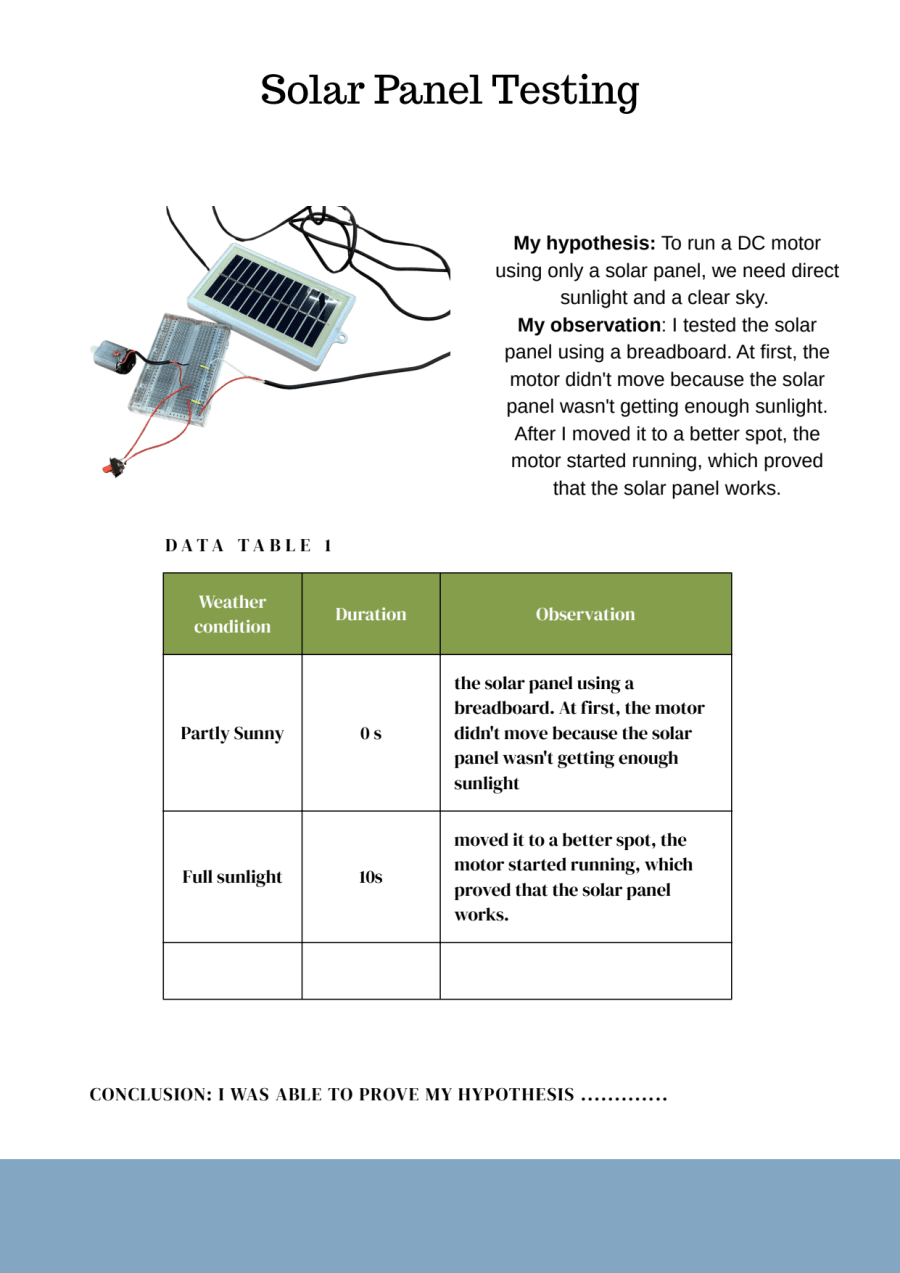
  2. Test a hypothesis: Wired a solar panel to a DC motor on a breadboard. In partial sun the motor didn’t turn; in full sun it ran.

  3. Build: Assembled the gears, shaft and chassis, with photos of each stage.

What went wrong

The motor kept shifting between the Lego parts.

Next step: Added blocks under and around it to hold it steady.

Where it stands

The finished mini car travelled 3 m in 4 s in strong sunlight, an average of 0.75 m/s.

Competencies this work can be put forward for

  • Engineering Design
  • Analysis & Evaluation
  • Reflection & Iteration
  • Growth Mindset

Ana Isa · Sep 2026 · working journal

Interactive Anatomy Game

How can we design an anatomically accurate, interactive game that models human organ systems using digital fabrication and circuit engineering?

Many people misjudge where their organs sit. Ana Isa may study medicine and wants to teach peers in a way that sticks.

  1. Research: Tabled real weights and dimensions of eight organs, then worked out a 3× scale-down for 3D printing.

  2. Model: Taught herself Blender: restarted the liver, then added the inferior vena cava opening and smoothed it.

  3. Design the game: Drafted a manual: rules, plus each organ’s function, scale, location and common conditions.

What went wrong

She couldn’t get the folds of the brain to model, despite several attempts.

Next step: Parked it, moved on to the stomach, and planned to return with a new approach.

Where it stands

Liver modelled and ready to print; brain base shaped; organ list narrowed to seven for the first build.

Competencies this work can be put forward for

  • Inquiry & Research Skills
  • Synthesis of Information
  • Technological Creativity
  • Reflection & Self-assessment

Team OneDash (6 learners) · 2023 · team project, completed

F1 in Schools: Design, Fund and Race a Car

Our main priority is to make a car that functions and will accelerate forward with one dash.

F1 in Schools is an international STEM competition. Teams design, build and race miniature CO₂-powered cars, and run the team like a business, from branding to sponsorship.

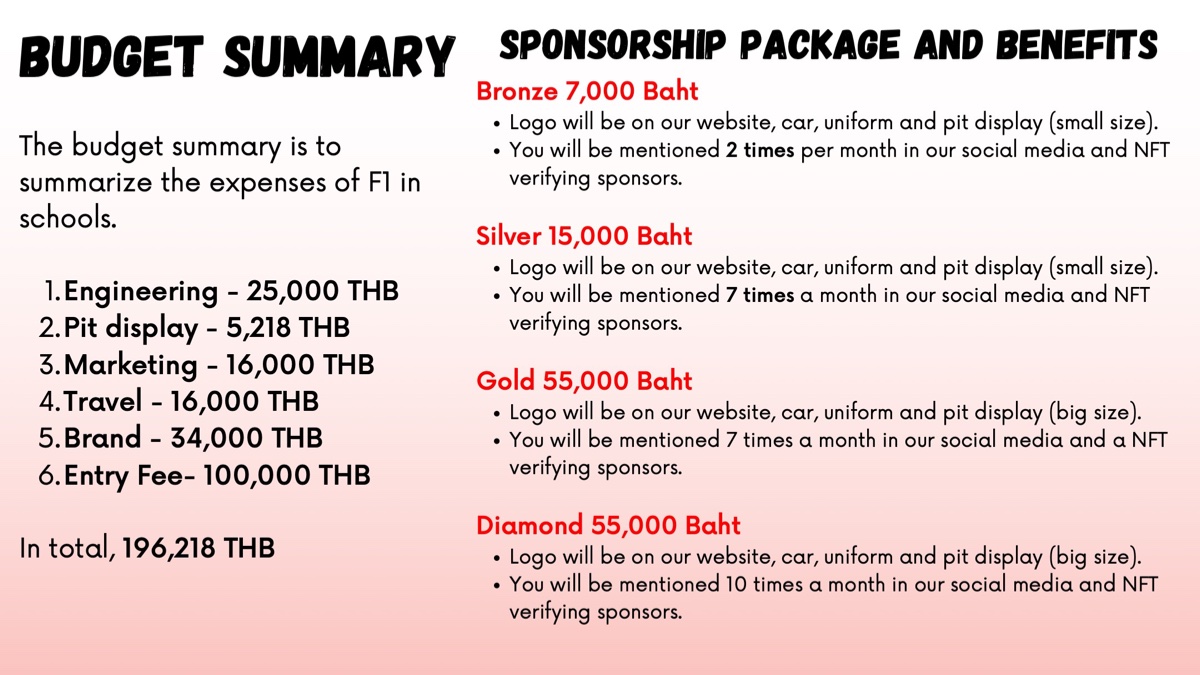
  1. Organise: Split into roles (team manager, engineers, marketing, graphics, resources) and set a budget of 196,218 THB.

  2. Design & test: Designed the car in Fusion 360, checked airflow in Autodesk Flow Design, then CNC-machined, 3D-printed and track-tested it.

  3. Raise funds: Visited offices, emailed proposals and pitched at two WeLearn showcases. Four companies came on board.

What went wrong

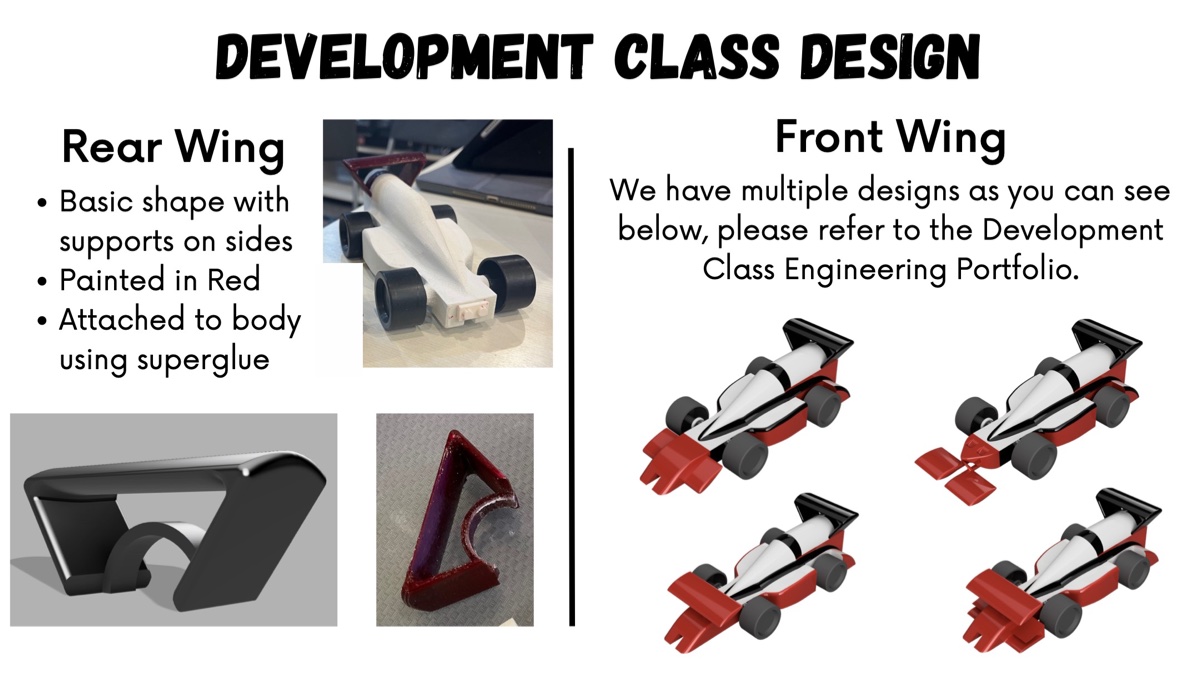
The entry class body didn’t fit the stricter development class rules (the “no-go zone”).

Next step: Reworked the same body to fit, added rear sidepods and tried several front-wing designs.

Where it stands

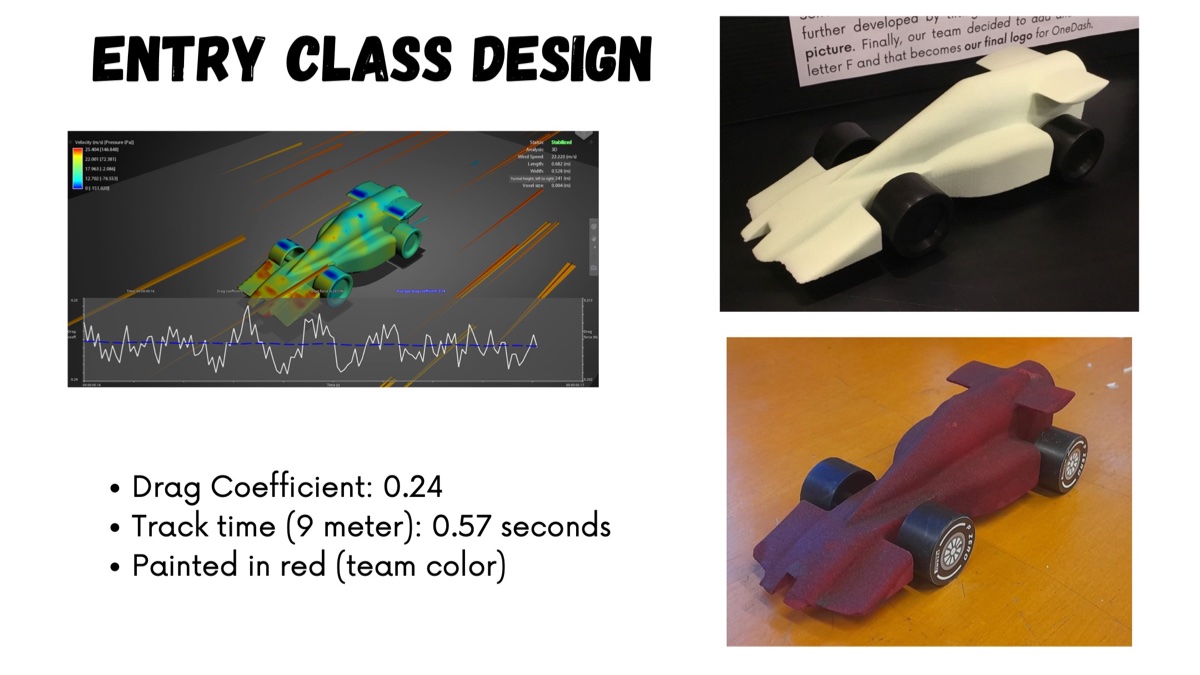
Entry class car: drag coefficient 0.24 and 0.57 s over the 9 m track. Four sponsors, plus enterprise and engineering portfolios and a pit display.

Competencies this work can be put forward for

  • Engineering Design
  • Team Commitment & Responsibility
  • Persuasion & Influence
  • Startup Financial Planning
Competencies earned in each of the 7 Future Skills on a real WeLearn learner record28competencies
What a full record looks like

4 years of projects, one skill profile

This is the real record of a WeLearn learner, authorised in June 2026 with identifying details removed: 25 foundational and 3 advanced competencies from 12 learning experiences. Each band is one earned competency. The empty segment is honest too: that skill hasn’t been evidenced yet.

  • Self-directed Learning4
  • Critical Thinking & Problem Solving5
  • Leadership & Collaboration3
  • Effective Communication10
  • Creative Thinking4
  • Social & Emotional Aptitude0
  • Entrepreneurship2
Explore this record and the 7 Future Skills
Inside a real record

Four years, five experiences, sixteen credits

Excerpts from the official Mastery Transcript Consortium record of a WeLearn learner graduating in 2027, authorised in June 2026. The name and personal details are removed; the mentor feedback is quoted as written.

3.1.5 Project Management

Formula 1 in Schools: Marketing and sponsorship for the team

“[The learner] finished various marketing and sponsorship aspects: creating social media platform, brochures and Showcase invitation poster, sponsorship pitch trip, sending and follow-up emails, and helping the team in other aspects. Good project management.”
WeLearn faculty mentor
2.1.7 Problem Solving Strategies Mentor asked for more

Design your Future Learning Ecosystem: 3D digital design of a sports centre for the learning centre

“Thank you for your submission. To ensure you receive full competency recognition, please provide more details about your role and the problem you are trying to solve in relation to this project.”
WeLearn faculty mentor
4.1.3 Public Speaking

Career Track Passion Project: Final presentation of a hip hop production project

“Great job on your public speaking! You delivered your ideas clearly and confidently. Keep practicing to strengthen your skills even further. Proud of your progress!”
WeLearn faculty mentor
3.1.1 Strategic Project Execution

Passion Project: Trailer for a documentary on Thailand’s hip hop culture and its artists

“Your completed project deliverables show that you have a wonderful vision and the energy to cross the finish line!”
WeLearn faculty mentor

The amber card is the important one: credits aren’t automatic. When evidence doesn’t yet show the skill, the mentor says what’s missing and the learner resubmits.

Questions from parents

What is the Mastery Transcript?
It is a learning record from the Mastery Transcript Consortium (mastery.org). Instead of letter grades, it lists the competencies a learner has shown, each linked to evidence a mentor has reviewed. Universities can open the work behind each credit.
Does it replace a diploma or IGCSEs?
No. WeLearn learners still follow an academic pathway (Pearson Edexcel IGCSE and A-Levels, or a US High School Diploma). The Mastery Transcript sits alongside those qualifications and shows what grades can’t.
Do universities accept it?
It is sent as part of an application, alongside academic qualifications, and universities read it as part of a holistic review. Each university has its own entry requirements, so we plan applications with every learner individually. The Mastery Transcript Consortium publishes its own information for families on mastery.org.
What if a project doesn’t work?
That is often where the best evidence comes from. Yuri’s wobbling motor and Ana Isa’s brain model are both on their records-in-progress, because showing how you respond to a setback is a competency too.
Who sees my child’s portfolio?
The learner, their family and their mentors. A learner chooses what to share with universities. Work only appears publicly, like on this page, with the family’s permission.

See what your child's record could look like

Start with a free 30-minute Discovery Call. We'll walk you through a real record and how credits are earned.

Book a Discovery Call