
Dyslexia & learning differences · Ages 11–18 · Sathon, Bangkok
Smart, capable — and struggling to show it on paper.
Teens with dyslexia and other learning disabilities are often sharp thinkers, strong talkers and creative problem-solvers. But in a system that measures almost everything through reading speed, spelling and timed written tests, their ability stays hidden.
At WeLearn, an alternative learning center in Bangkok, teens learn in a low-stress environment with personalized learning, a dedicated mentor and real projects — so they can show what they know in ways that play to their strengths.
Free · 15 minutes · No pressure
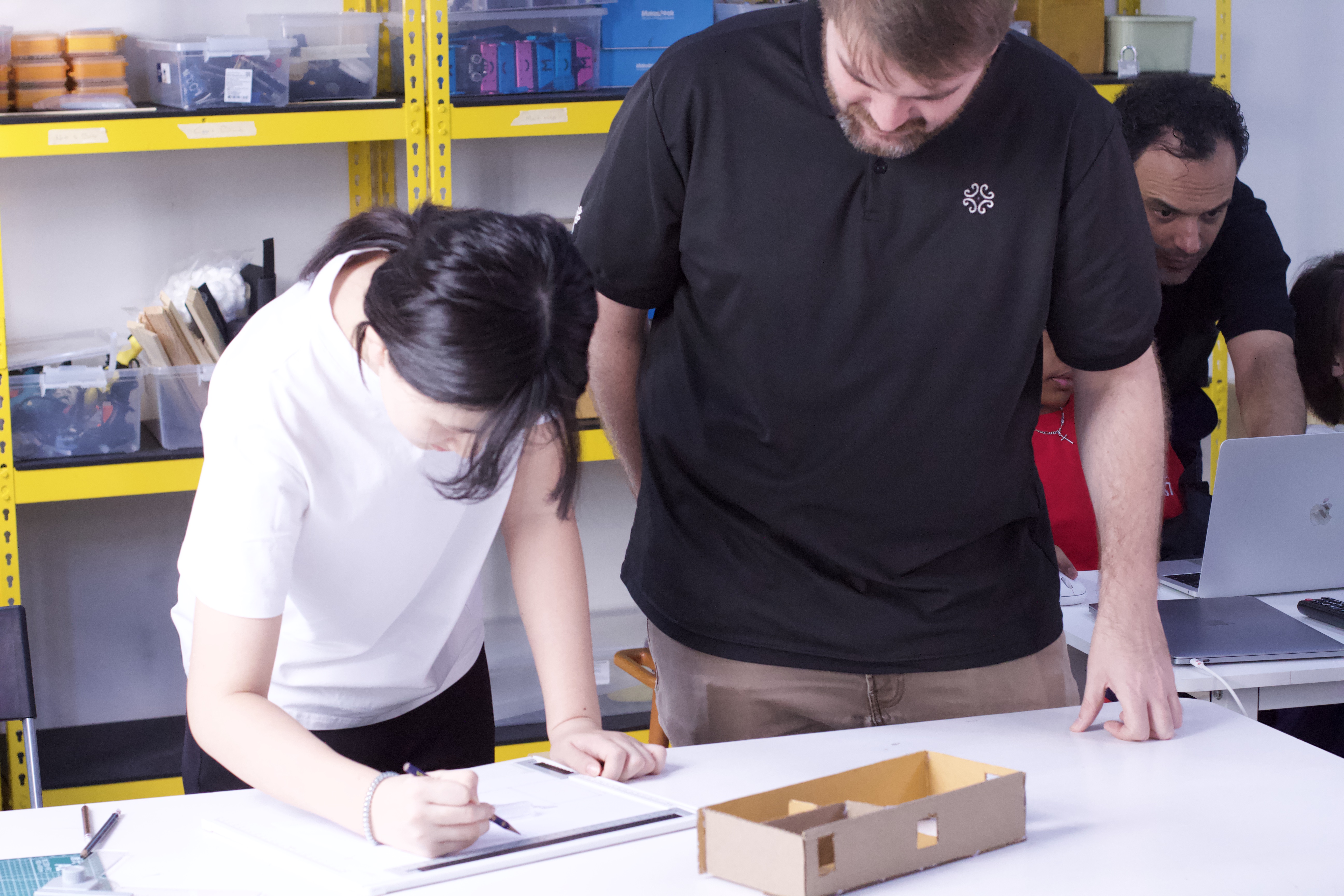
Does this sound like your teen?
Learning differences look different in every young person, but parents often notice patterns like these.
- Explains ideas brilliantly out loud, but written work doesn’t match
- Reads slowly or avoids reading, and gets exhausted by homework
- Spelling, handwriting or maths facts are a constant battle
- Runs out of time in tests, even when they know the material
- Has been told to “try harder” or “be more careful” for years
- Is losing confidence and starting to say they are “not smart”
Learning differences aren’t a lack of intelligence
Dyslexia affects how the brain processes written language. Dyscalculia affects number sense, dysgraphia affects writing, and processing differences affect how quickly information can be taken in and handled. None of them say anything about how intelligent, creative or capable a young person is.
The trouble comes when school asks every student to learn the same way, at the same speed, and prove it in the same written format. Teens with learning differences end up working twice as hard for half the credit. By secondary school many are tired, anxious and convinced the problem is them.
The WeLearn environment
A place where your teen can breathe again
Before any strategy works, a young person has to feel safe. Everything at WeLearn starts from these five commitments.
Safe & Happy Environment
A safe, calm and friendly space where young people can learn happily.
Freedom to Explore
Room to try things, ask questions and not be afraid of making mistakes.
Every Child Is Different
Every child learns and grows at their own pace. Some already know what they love; others are still discovering it.
Individual Support
We follow each learner closely and step in to help as soon as a problem appears.
Be Yourself, Reach Your Potential
When young people feel safe and free to be themselves, meaningful learning happens — and that leads them to their full potential.
- Low-stress learning environment
- Personalized learning
- Mentorship
- Learning by doing
How WeLearn supports teens with learning differences
We change the way learning is delivered and assessed, so your teen’s ability can finally be seen.
Show what you know, your way
Project-based learning means understanding can be demonstrated by building, designing, explaining and presenting — not only through timed written tests.
Personalized learning plans
Every learner has a living learning plan that builds on their strengths and gives targeted time to what is harder, adjusted as they grow.
Mastery, not speed
Our mastery-based model removes the pressure of keeping pace with a class. Learners move on when they understand, with no penalty for taking longer.
A mentor who knows how they learn
Weekly 1-on-1 mentorship and daily coaching mean someone notices early when something isn’t working, and adapts the delivery to the learner.
Rebuilding confidence
In a safe, low-stress environment where mistakes are part of learning, teens stop hiding what they find difficult and start taking on challenges again.
Recognised qualifications
Learners work towards accredited IGCSE or US Diploma pathways, so learning differently never closes the door on university.
Questions parents ask us
Does WeLearn support teenagers with dyslexia?
Yes. WeLearn welcomes learners aged 11 to 18 with dyslexia and other learning differences. Our mastery-based model, project-based learning and weekly 1-on-1 mentorship let teens learn and show their understanding in ways that suit how they think.
What other learning disabilities do you support?
Alongside dyslexia, families come to us with teens who have dyscalculia, dysgraphia, processing differences and ADHD, often in combination — and sometimes alongside giftedness, which is known as twice-exceptional (2e). Every learner gets a personalized plan rather than a one-size-fits-all program.
Is WeLearn a special-needs school?
No. WeLearn is a full-time alternative learning center for gifted, twice-exceptional and differently-wired teens. We are not a clinic and do not provide therapy. Teens with learning differences learn alongside peers in a personalized, low-stress environment.
Can my teen get extra time or other exam access arrangements?
Access arrangements for external exams such as IGCSE are set by the exam board and are based on evidence of need, usually a recent assessment. Every case is different, so we talk this through individually with each family during the discovery call and admission.
Does my teen need a formal diagnosis to join?
No. A diagnosis is not required. If you have an assessment report, sharing it helps us personalise your teen’s plan. If not, tell us what you have noticed and we will start from there.
What is the first step?
Book a free 15-minute discovery call. We will listen to your teen’s story, answer your questions and tell you honestly whether WeLearn is likely to be a good fit.
Keep reading
Let’s talk about your teen
Tell us what learning has been like for them. In 15 minutes we can tell you honestly whether WeLearn could be the right next step.
Free · 15 minutes · No pressure